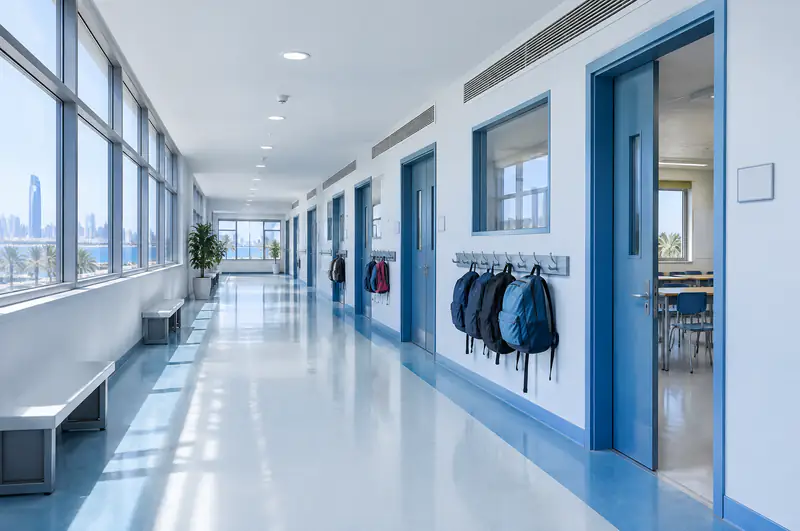

HVAC for learning spaces
School HVAC in Al Sahifah
In Al Sahifah, central Jeddah, schools in mixed residential-commercial blocks need balanced AC that runs efficiently without straining the building's older electrical infrastructure. Alrabih designs a system suited to the transition between heritage and modern.
- Even distribution
- Quiet in class
- Summer maintenance
Clients We're Proud to Serve
Organisations and companies that trusted Alrabih with their projects.



































When a school needs a specialist
- 1
Hot classrooms affecting learning
When teachers report heat that breaks concentration and tires students by midday, the problem is usually in air distribution, not unit capacity. A site survey finds where it goes wrong and what is needed.
- 2
Unit noise interrupting the lesson
A unit in the wrong spot, a clogged filter or an unbalanced fan creates noise that distracts the class. We find the source on site and fix it, and at installation we choose units and routes suited to a classroom environment.
- 3
Upgrading the system over summer
The long summer break is the only window for installation or replacement work that needs extended hours inside classrooms. We plan with school management to finish before the first school day so the timetable is not affected.
Who it's for
Running a school that needs maintenance
We set up a preventive and corrective maintenance contract covering classrooms, the prayer room and corridors, carrying out major work in the summer break so the school year starts with a sound system.
Ask on WhatsAppBuilding a new school that needs AC design
We review drawings with the contractor and design air distribution and ductwork before ceilings close, so every classroom has even airflow and low noise from the first day of use.
Ask on WhatsApp
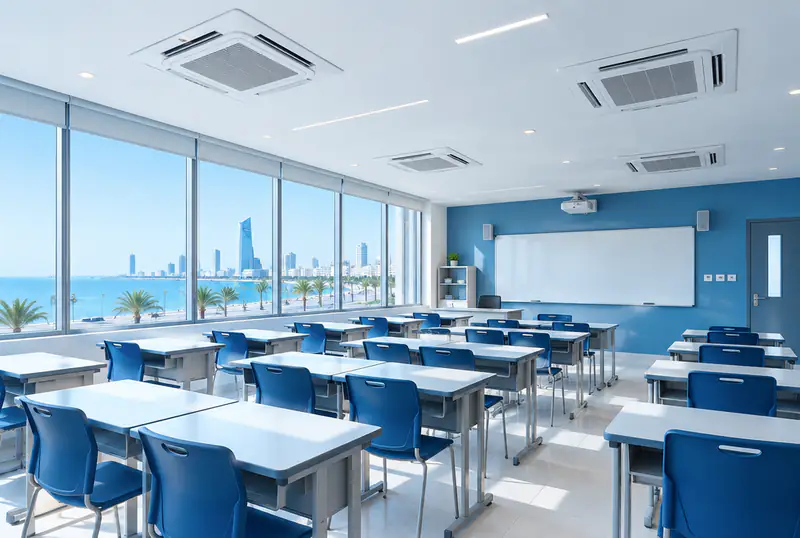
What our school work covers
- Survey of all rooms
- Air distribution and unit placement
- Units beyond students' reach
- Ductwork to SMACNA standards
- Preventive and corrective maintenance contracts
How we work
How we work
- 1
School building survey
We visit the school, measure classrooms, corridors and the prayer room, and record heat sources and loads in each space before making any recommendation.
- 2
System design and planning
We draw a layout showing unit positions, duct routes and ventilation openings, and agree an installation schedule with school management so work does not clash with classes.
- 3
Installation during the break
We carry out installation during the holiday or at times that do not disrupt school, mounting units in high or protected positions away from students.
- 4
Commissioning and handover
We run the full system and check air distribution in every classroom, measuring the air at desk level, then hand over to the school with a record of what was done.
Planned installation or scattered units?
| Alrabih | The usual way | |
|---|---|---|
| Air distribution | Designed for the classroom | Uneven, corners stay hot |
| Noise level | Siting and route reduce noise | Unit drowning out the teacher |
| Unit position | Out of students' reach | At hand height |
| Summer service | Planned before term starts | Faults appear in the first week |
| Fresh air supply | Designed into the layout | An open window or nothing |
Everything your AC needs, from one team
From system design and duct fabrication to installation, commissioning and maintenance.

Split AC installation
Request this serviceDuct installation
Request this serviceCentral AC installation
Request this serviceDuct fabrication
Request this serviceCold room installation
Request this serviceElectro-mechanical works
Request this serviceChiller & AHU installation
Request this serviceHVAC design
Request this serviceAC repair & faults
Request this serviceAC cleaning
Request this serviceRefrigerant charging
Request this serviceCentral AC maintenance
Request this serviceChiller maintenance
Request this serviceAC removal & refitting
Request this serviceDuct cleaning & sanitising
Request this serviceAC servicing by brand
Request this serviceOperation & maintenance contracts
Request this serviceAHU maintenance
Request this serviceFridge & freezer service
Request this serviceCold rooms
Request this serviceDisplay fridges & chillers
Request this serviceFactory HVAC
Request this serviceWarehouse HVAC
Request this serviceVilla & home HVAC
Request this serviceHotel HVAC
Request this serviceSchool HVAC
Request this serviceHospital HVAC
Request this serviceMosque HVAC
Request this serviceMall & retail HVAC
Request this serviceRestaurant & cafe HVAC
Request this service
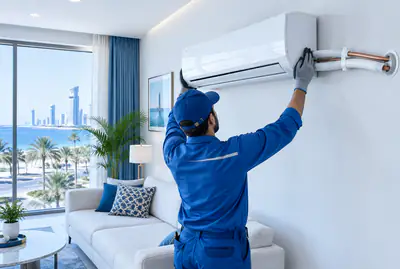
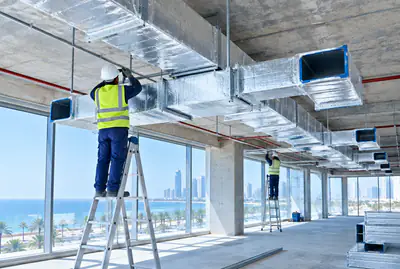


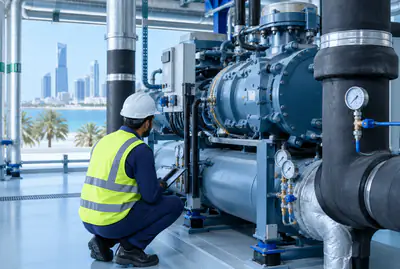
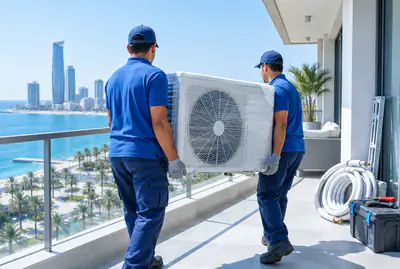
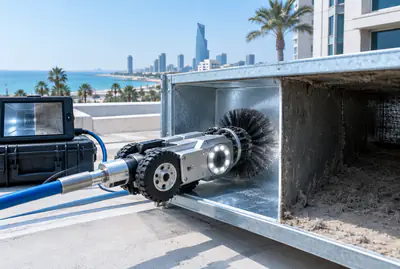
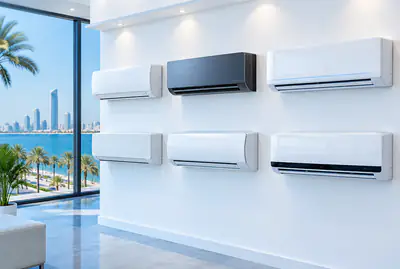





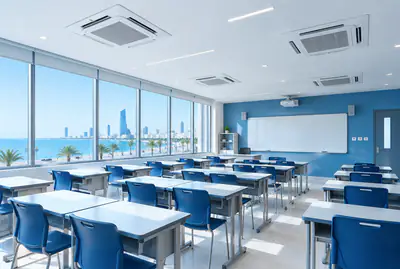




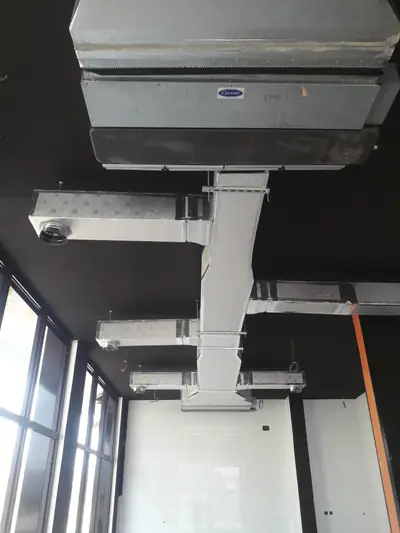
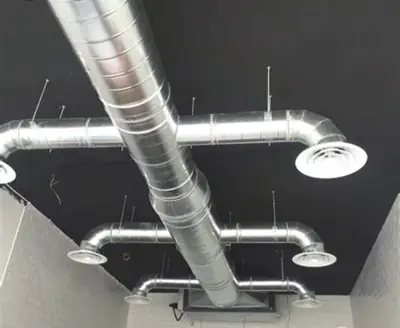
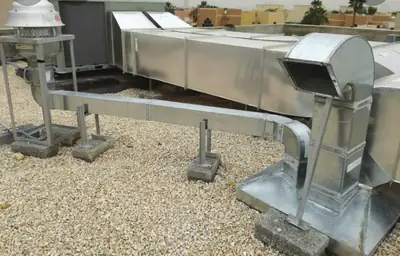
Some of our work
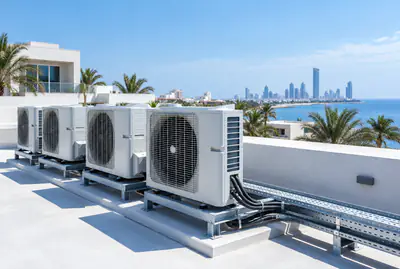
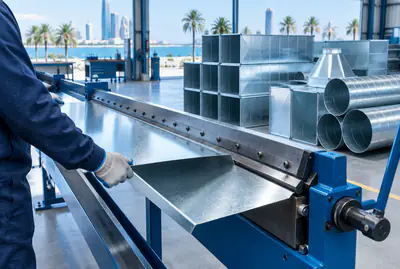
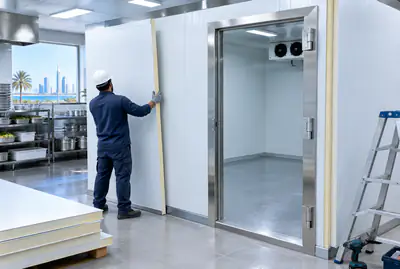
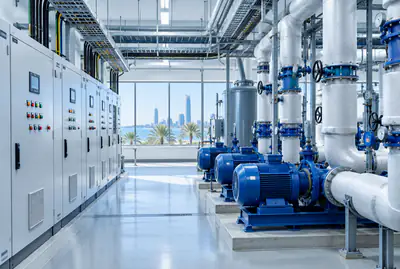
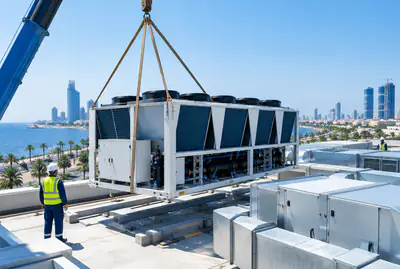
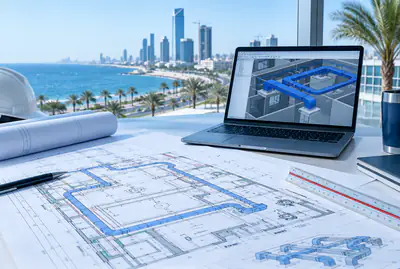
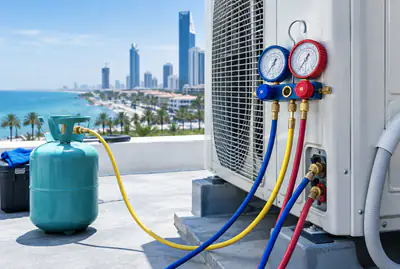
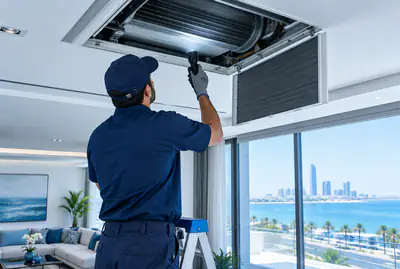
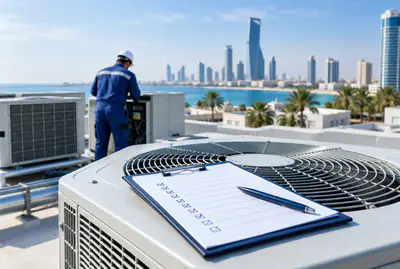
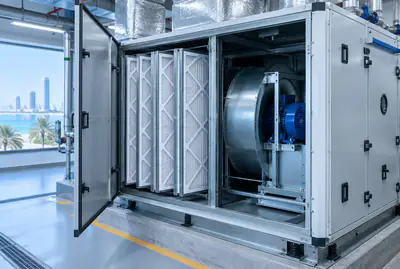
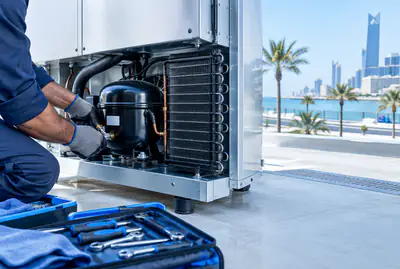
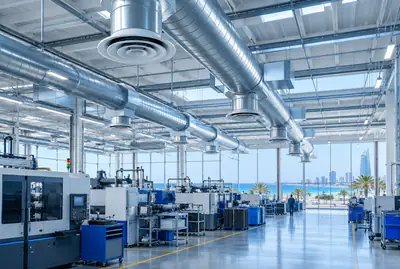
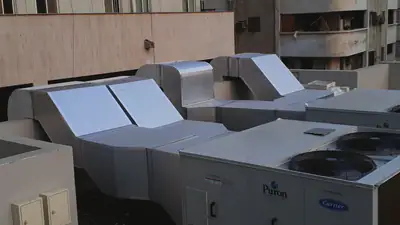
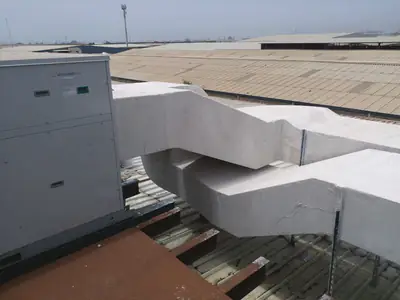
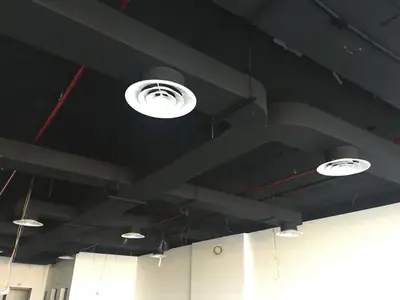
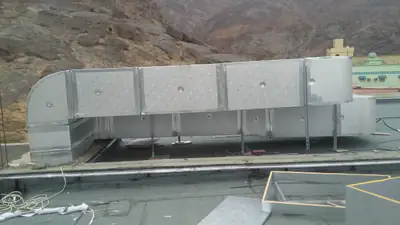
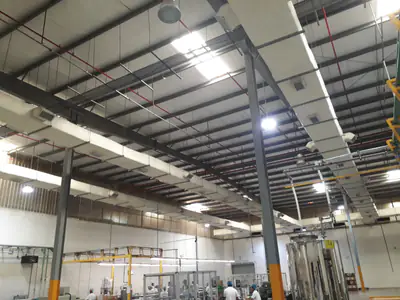
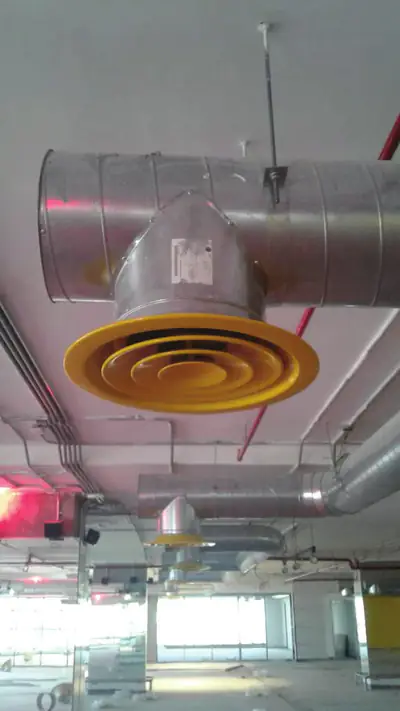
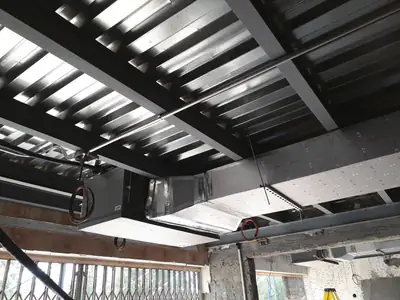
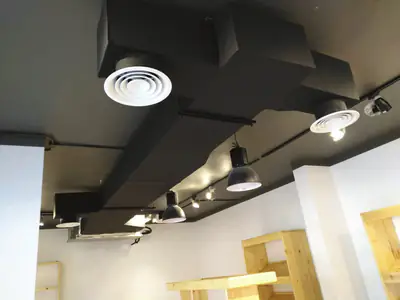
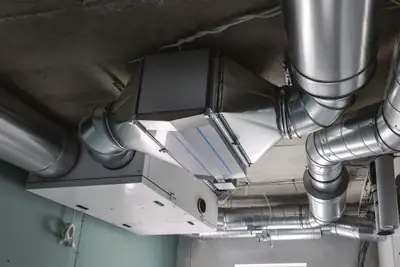
Ductwork, rooftop units and diffusers, from work we've completed in Jeddah.
Customer reviews
What our customers say
- Muhammadramzan 2641
“MashaaAllah. Services are so good. Behaviour and kindness 100/100. Prices are less then Market. Fully recommended”
- shahzeb armani
“Wow. Prices are so comfortable. Outstanding services. People are so talented and nice”
- Tawfik AlyawerLocal Guide
“U can find all u need for air conditioning”
Your satisfaction matters to us! If you had a great experience with us, we'd love a 5-star rating and a kind review.
Worked with us? Leave a reviewService areas
We come to you anywhere in Jeddah
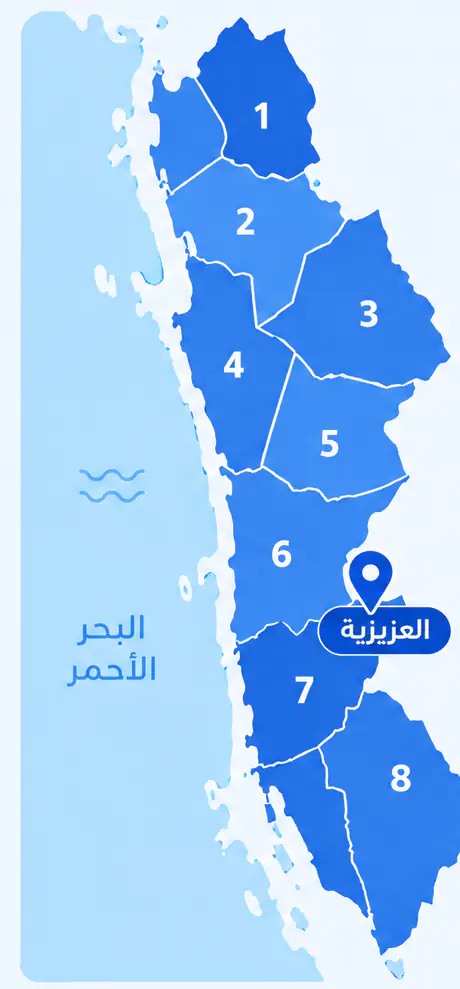
From Al Shiraa and Al Yaqout in the north to Al Thaghr and Al Quraiyat in the south, with our base in Al Aziziyah.
What sets this district apart
Al Sahifah, central Jeddah, blends older and newer buildings, with schools often occupying redeveloped residential blocks or heritage structures. Electrical systems in these buildings may be power-limited or use old wiring unable to handle large loads, so the AC must run efficiently and avoid repeated brownouts. Old buildings may also mean low ceilings or tight spaces for ducts, requiring design flexibility. High residential density and proximity to heat sources like restaurants and shops raise overall heat gain.
Al Sahifah is traditional central Jeddah, blending heritage and newer structures distributed at moderate density.
Most Al Sahifah schools run on 63-amp electrical circuits or less, limiting how large a central AC unit can be without upgrading the building's electrical infrastructure.
The AC setup in Al Sahifah
- 1
Medium-capacity central system suited to limited power
Al Sahifah schools typically use a 40 to 60 tonne central system that fits existing electrical circuits without major upgrades.
- 2
Flexible ducts adapted to older building constraints
Tight spaces and low ceilings call for flexible ductwork that bends around obstacles, minimising the need for structural modifications.
- 3
Outdoor unit in an isolated zone near the electrical panel
The outdoor unit is sited close to the main electrical panel to minimise wire runs, and in an isolated zone away from classrooms to reduce noise.
Before the visit
Before our visit in Al Sahifah
- 1
Test the electrical circuit and distribution panel
Inspect the main electrical panel and note the available amperage capacity, and confirm whether spare circuits exist or a new one must be added for the outdoor unit.
- 2
Survey the structure, ceilings and tight spaces
Map ceiling heights in each classroom and available void spaces above or between walls to determine whether rigid ducts can fit or flexible ductwork is needed.
- 3
Locate the outdoor unit near the electrical source
Identify the best outdoor location closest to the main electrical panel, so power line runs are short and voltage drop at startup is minimised.
More districts for School HVAC
Other services in Al Sahifah
FAQ
Questions about School HVAC
How do you keep noise low inside the classroom?
Noise usually comes from high air velocity or an indoor unit mounted on a shared wall between two classrooms. We select units with low sound ratings, calculate air velocity at each outlet to prevent whistling, and insulate duct runs above the suspended ceiling. The exact unit position and diffuser angle are decided during a site survey of each room.
How do you handle the prayer room and corridors alongside classrooms?
The prayer room needs wide, quiet air distribution at low level above worshippers, which is quite different from a classroom. Corridors need enough cooling to prevent hot air from flowing into classrooms when doors open. We design each zone on its own air circuit with a separate thermostat; the final layout depends on floor area and ceiling height on site.
Can ductwork be added to an existing school building?
In most cases, yes. We check the gap between the ceiling and the slab, and how accessible the ceiling void is, before making any decision. We fabricate round or rectangular ducts in our own workshop to match the building's exact dimensions, and we route them to avoid structural columns and penetrations. Where ceiling space is too tight, cassette or concealed units may be the better fit.
Why are indoor units positioned out of students' reach?
A low-mounted unit in a room full of students is easily damaged: fins get bent, the drain port gets blocked, and the fan grille gets broken. We mount units at heights and positions that keep them clear of students, while still delivering cooled air down to the seated zone. The precise position is set after the team measures ceiling height and seating layout in each room.
Can the work be done during the school year?
Large tasks such as running new ductwork or replacing multiple units are scheduled during the long summer break to avoid any disruption to lessons. Routine maintenance and isolated repairs can be arranged outside school hours or at weekends in coordination with school management. Work inside classrooms during the school day requires a site assessment first to confirm it can be done without causing disruption.
The school is in an old building with limited power, can a central AC system work?
Yes, but we must choose the unit carefully. We design a medium-capacity system rather than maximum, and recommend a dedicated circuit for the outdoor unit, which might need 32 amps alone. In some cases, we may advise upgrading the main electrical panel from 63 to 100 amps.
Ceilings are low and corridors narrow, how do we run the ducts?
We use flexible ductwork that can bend around tight spaces instead of rigid pipes, routing it through corners and gaps. In very tight situations, we may recommend separate splits instead of one large central system.
Nearby restaurants and shops generate lots of heat, does that affect the school?
Yes, heat from neighbouring shops seeps into the school especially if walls are shared. We slightly increase the AC capacity to offset this extra heat gain, and recommend additional thermal insulation on shared walls.
Old wiring, could it cause problems when the unit runs?
Old wiring may not handle the high current the outdoor unit draws at startup, causing voltage dips or repeated cutouts. We test the wiring before installation and recommend running a dedicated cable of appropriate gauge from the main electrical panel to the outdoor unit.